
EUTOPIA CONNECTED LEARNING COMMUNITY LEGAL HISTORY 25-26 OPENING LECTURE: Prof. dr. Miloš VEC (Universität Wien), "After 1919 and after 1945: How two World Wars shaped German Thinking on International Law" (ONLINE, 14 NOV 2025, 15:00 Brussels Time)
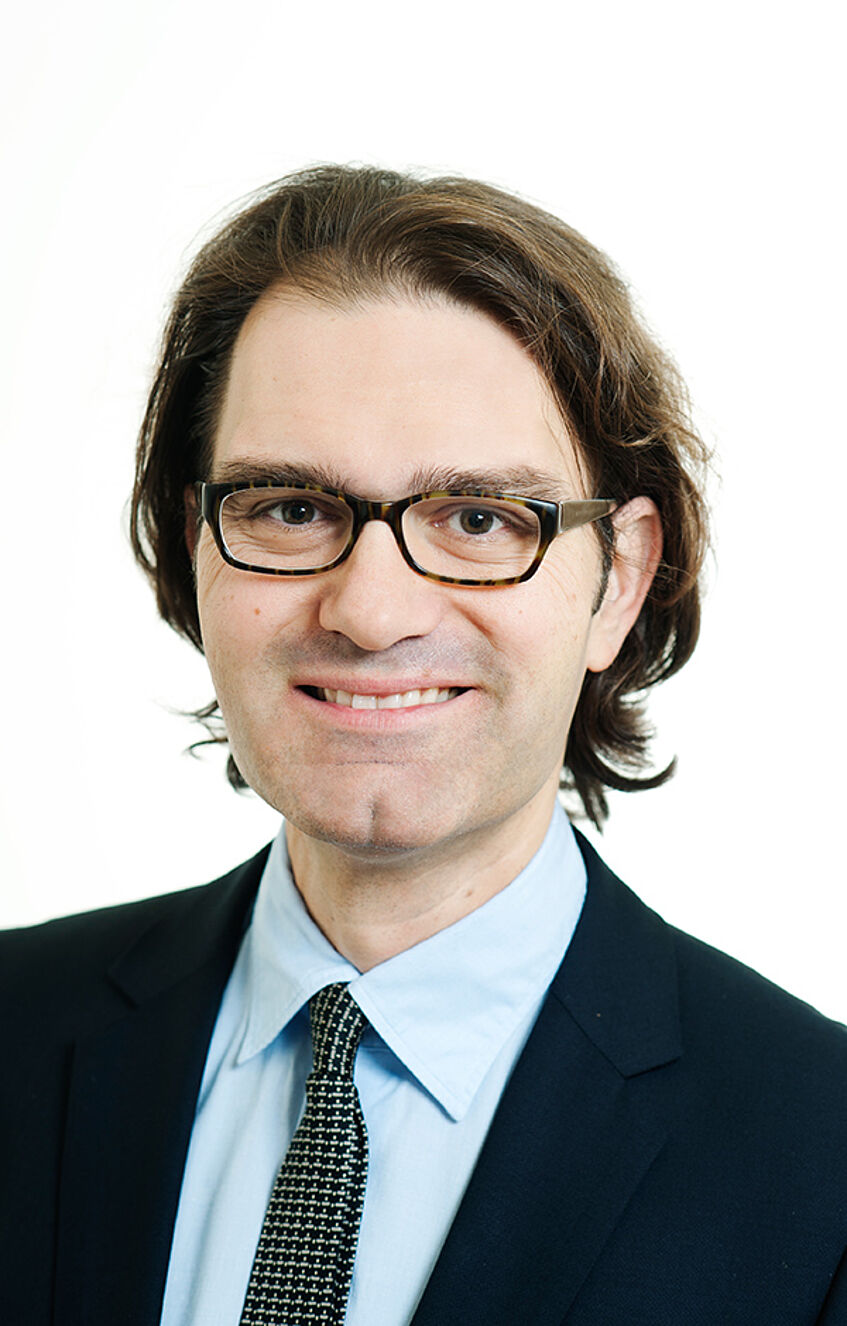


(image source: University of Vienna)

The EUTopia Connected Learning Community Legal History is delighted to welcome Prof. dr. Miloš Vec (Universität Wien) for its annual opening lecture on Friday 14 November 2025.

Within the framework of this year's theme The End of War, Prof. Vec will address the following topic:

After 1919 and after 1945: How two World Wars shaped German Thinking on International Law

On the Speaker

Prof. Vec is currently at the Universität zu Köln as the Second Hans Kelsen Visiting Professor. Prior to being appointed at the Universität Wien in 2012, he taught and carried out research in Frankfurt, Hamburg, Bonn, Konstanz, Tübingen, Lyon II, Vilnius and at the Humboldt University in Berlin. He is a renowned legal historian. 

His publications include the monographs Zeremonialwissenschaft im Fürstenstaat. Studien zur juristischen und politischen Theorie absolutistischer Herrschaftsrepräsentation (Klostermann, 1998), Recht und Normierung in der Industriellen Revolution. Neue Strukturen der Normsetzung im Völkerrecht, staatlicher Gesetzgebung und gesellfschaftlicher Selbstnormierung (Klostermann, 2006) and -recently- Wolfgang Preiser (1903-1997) und sein "Institut für Geschichte des Völkerrechts" an der Universität Frankfurt Denkräume und Sozialwelten eines Völkerrechtshistorikers im 20. Jahrhundert (Nomos, 2025). He obtained the prestigious Otto Hahn Medal of the Max Planck Society in 1997, the Academy Prize of the Berlin-Brandenburg Academy of Sciences in 2008 and has been a senior Global Hauser Fellow at New York University in 2017. Between 2016 and 2020, he wass a permanent fellow at the Institut für die Wissenschaften vom Menschen in Vienna. 

Prof. Vec is co-editor of Constructing International Law – The Birth of a Discipline (with Luigi Nuzzo, Klostermann, 2012), Paradoxes of Peace in Nineteenth Century Europe (with Thomas Hippler, Oxford, 2015), The Transformation of Foreign Policy (with Andreas Fahrmeir and Gunther Hellmann, Oxford, 2015), Western International Law, 1776-1870 (vol. VII of The Cambridge History of International Law, ed. Randall Lesaffer; with Paulina Starski, Cambridge, forthcoming) and The Congress of Vienna and the Transformation of International Law (with Matthias Schmoeckel, Brill, forthcoming). Prof. Vec equally is a member of the editorial board of the book series Studien zur Geschichte des Völkerrechts (Nomos) as well as of the Journal of the History of International Law/Revue d'histoire du droit international (Brill).

Prof. Vec contributes regularily to the leading German newspaper Frankfurter Allgemeine Zeitung, since 1989.

Practicalities

This lecture (with Q&A) takes place on Friday 14 November 2025 at 15:00 (Brussels/Paris Time), on Microsoft Teams

Target audience are lecturers/professors, researchers and students of the associated institutions (Vrije Universiteit Brussel - Prof. Frederik Dhondt; CY Cergy Paris Université - Prof. Caroula Argyriadis-Kervégan; University of Warwick, dr. Rosie Doyle; Univerza v Ljubljani, prof. dr. Katja Škrubej; Universitat Pompeu Fabra Barcelona, Prof. dr. Alfons Aragoneses). Yet, the meeting is also open to external particpants.

Interested listeners or auditors can contact Frederik dot Dhondt at vub dot be for registration.


Comments

Most popular posts

CY CASE - Women and union organization in France (19th - 20th century)

Women and labor  Restrictions and incapacities  Since the middle ages, a woman is under male authority, she is economically dependent of men who control all her life: since her birth, she receives the authority of her father; authority is given to her husband when she marries, for their domestic life; masculine authority follows her at work, under the orders of her employer… When they had the chance to have a job outside of the family home, women were slowed by corporations (in the early modern period), because most did not accept the settlement of women in a male-dominated social world of work.  It is only at the end of the 18 th century that corporations ended, especially in France with the d’Allarde decree in march 1791, and in Great Britain : from then on, women could join easily the industry. Therefore, they were seen in feminine fields such as in millinery or lingerie industries.  Les ouvriers du livre, Rébérioux Madeleine, 1981 Marriage and Civil code  T...

EUTopia PEAK EVENT: Connectedness in Legal History (Brussels: 14-15 March 2024)

(event poster; credits: dr. Elisabeth Bruyère) The European University EUTopia brings together universities across the European continent, as well as partners from the whole world. Students, academics and supporting staff live and work in a vibrant super-diverse microcosm every day. Logically, norms and practices are influenced by various layers of normativity. University research is increasingly targeted at the United Nations Sustainable Development Goals (SDG). Funding is provided by the European Union, national, regional and sometimes even local governmental authorities, but also by multinational corporations. Universities have to abide by laws, regulations, legal principles and judicial decisions emanating from multiple jurisdictions, often not situated in the country wherein they are incorporated. (Image: 'The Egg', building of the European Council; source: EUDebates.tv ) Nowhere is this ad hoc diversity so visible as in Brussels, capital of the European Union , th...

Peak event report: VUB students

Depending on the point of view, Paris is either seen as Brussels in big, or Brussels as ‘petit-Paris’. In this blogpost we, the EUTopia students from Brussels, guide you through Paris from the viewpoint of a small minority in a very big city. We write this blogpost, in true EUTopian spirit, in three different languages, providing thoughts on engaging encounters, thought-provoking presentations and winding walks through Paris. The song 'Bruxelles je t’aime', by the Brussels-born-but-living-in-Paris singer Angèle, serves as a welcome guide.   Day one: quiet before the storm? Not in Paris! Et sûrement que dès ce soir le ciel couvrira une tempête Mais après l'orage, avec des bières, les gens feront la fête En of het Peak Event ons aansprak. Een dik uur Thalys, een korte metrotrip en twee keer rond het indrukwekkende Monument à la République stonden we naast studenten uit Warwick, Ljubljana en Barcelona. Wanneer het regent in Parijs, druppelt het in Brussel. Maar wann...